


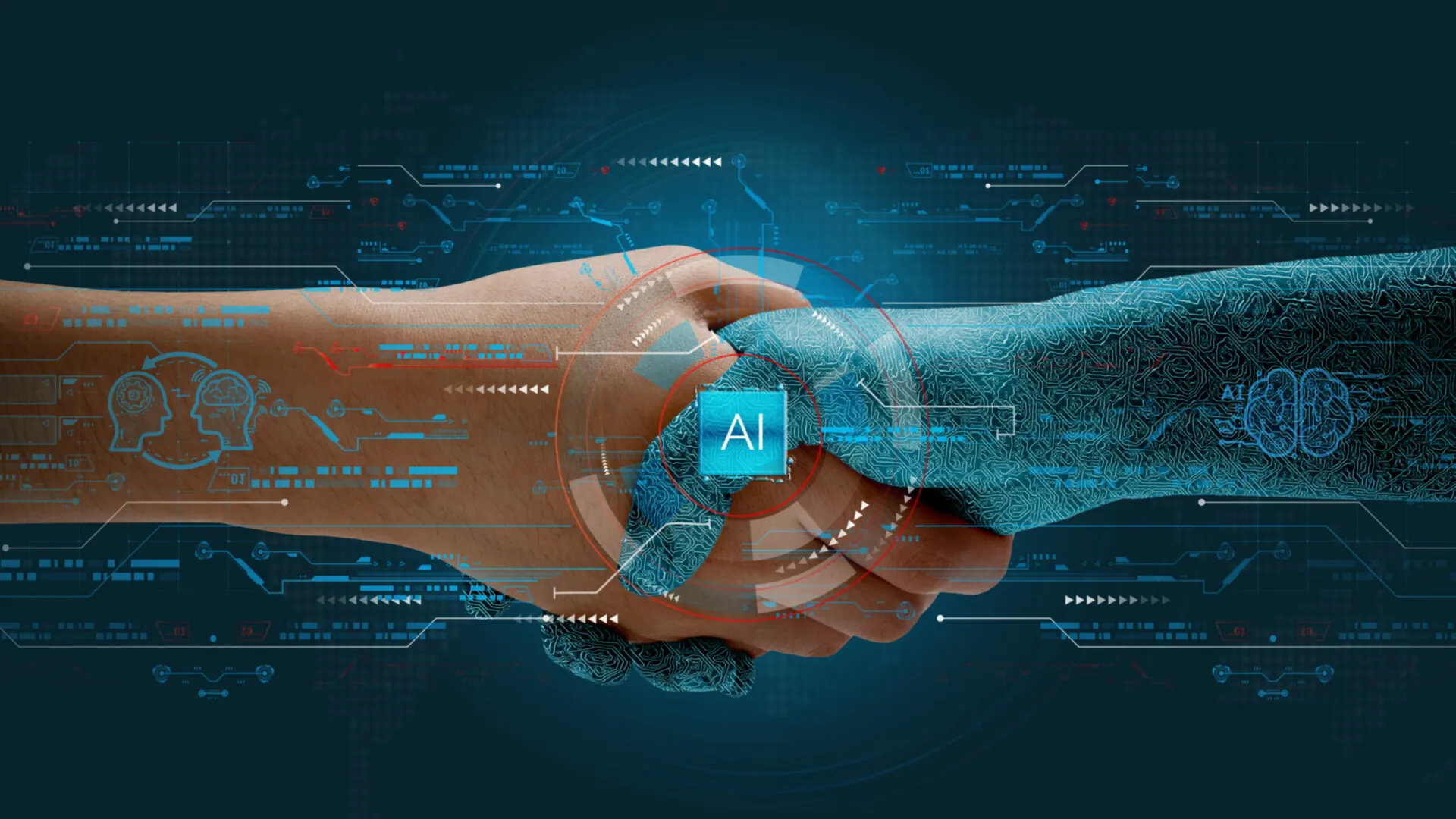
Imagine walking into your workplace and being greeted not just by your usual colleagues, but also by robots who can speak, walk, lift, help, and believe it or not collaborate. This isn’t a sneak peek into a sci-fi movie; it’s the emerging reality of humanoid co-workers.
As industries grow more digital and demand for precision and round-the-clock service intensifies, organizations are turning to humanoid robots as active participants in their workforce. These aren’t your average automation arms or factory bots they’re designed to behave, communicate, and assist like humans. Whether you’re in tech, healthcare, logistics, or retail, humanoid co-workers are about to become your new team members.
What Are Humanoid Co-Workers?
Humanoid co-workers are autonomous robotic systems engineered to simulate human behavior, anatomy, and cognitive functions. Unlike industrial robots confined to factory floors, humanoid co-workers are built for environments that were designed for people think offices, hospitals, warehouses, and retail stores. They typically include bipedal locomotion, sensor fusion for environmental awareness, vision systems for object recognition, AI for decision-making, and natural language processing to converse with human teammates.
Their design allows them to physically interact with tools, environments, and humans in a natural and intuitive way. Rather than replacing jobs outright, these robots are crafted to augment human potential. From lifting heavy items to assisting in routine documentation or customer queries, they’re stepping into roles that enhance human efficiency, safety, and comfort.
From Lab to Office Where Are They Now?
Until recently, humanoid robots were experimental showpieces dancing at expos or performing controlled tasks in labs. But fast-forward to 2025, and they’re now being tested and deployed in commercial and industrial sectors at scale.
- Automotive plants, such as those operated by BMW and Tesla, are integrating humanoids for line-side assistance, tool handling, and flexible assembly.
- In healthcare, humanoids like Grace (from Hanson Robotics) assist nurses by taking vital signs, answering patient questions, and even providing emotional companionship.
- Retail environments like airports and shopping malls use humanoid concierges to offer directions, information, and multilingual support.
- In education and R&D, humanoids are acting as experimental platforms for psychology, linguistics, and AI research, interacting directly with students and researchers.
Global adoption is accelerating, with nations like Japan, South Korea, and Germany leading in workplace robot integration. Tech giants including Tesla, Apptronik, Agility Robotics, and Sanctuary AI are investing billions into R&D to make humanoids truly universal workforce companions.
The Human-Robot Synergy
The core idea isn’t to isolate humans or humanoids — it’s about building collaborative ecosystems where each can do what they do best. Robots excel at precision, consistency, and endurance. Humans shine at abstract thinking, empathy, and improvisation. Together, they create a dynamic synergy.
Humanoid robots equipped with reinforcement learning algorithms can learn tasks by observing humans or being corrected in real-time. Over time, they improve performance without needing reprogramming. These adaptive robots can fit into shifting workflows, adapting to new roles based on demand.
Enterprises are now building “digital twins” of their processes, simulating human-robot cooperation in virtual environments before deploying physical counterparts. This enables smoother transitions, fewer accidents, and high-performance hybrid teams.
Challenges in Co-working with Humanoids
The integration of humanoid robots into human teams isn’t without challenges. These issues go beyond technology they touch on psychology, economics, and sociology.
- Worker acceptance and trust: Employees may fear job loss or feel intimidated by their robot colleagues. Building transparent communication and co-learning environments is critical.
- High initial costs: Building, deploying, and maintaining humanoids require significant capital. While costs are dropping, they remain a barrier for smaller firms.
- Complex training & integration: Getting humanoids to work with existing tools and software systems demands significant back-end customization.
- Security & data privacy: Robots equipped with cameras and microphones raise questions around surveillance and information misuse in the workplace.
Additionally, breakdowns in behavior like misunderstanding commands or navigating crowded spaces can create disruptions if not managed carefully. Human oversight and clear fail-safes are still crucial.
Ethical and Social Considerations
With the rise of humanoid workers, we face deep ethical questions. Should robots pay taxes? Can a robot be held accountable for its actions? Should humanoids be granted rights in service roles?
The impact on employment is also complex. While some low-skill repetitive jobs may be replaced, new jobs are being created in robot supervision, maintenance, training, and AI safety. Governments and educational institutions need to prepare the workforce for these shifting skill demands.
On a societal level, humanoids will challenge our assumptions about identity, labor, and human uniqueness. Philosophers and technologists are already debating how relationships between humans and intelligent machines will evolve in work and life.
What the Future Holds
By the end of this decade, humanoid robots will become integral components of hybrid teams in many sectors. With advancements in multi-modal AI (vision, speech, gesture) and edge computing, these machines will function with more autonomy and intuition than ever before.
Expect to see humanoids that can:
- Learn new tasks from YouTube-like tutorials
- Collaborate with humans through shared AR/VR environments
- Integrate with wearables to understand team fatigue and mood
- Use swarm intelligence to coordinate across large-scale operations
Countries are already racing to develop national frameworks for human-robot labor policy, while companies are building internal guidelines for humanoid integration and ethics. If done right, this could be the dawn of co-evolutionary workplaces, where AI and humans learn, grow, and innovate together.